Artificial Intelligence 3D Icon Design: Elevating Digital Visuals with Chubby Aesthetics
In the rapidly evolving landscape of digital design, first impressions are often formed in milliseconds. As brands and creators strive to stand out in a saturated market, the visual language we use becomes critical. This is where Artificial Intelligence 3D Icon Design steps in, offering a fresh, engaging, and highly versatile approach to visual communication. By moving away from flat, sterile graphics and embracing smooth, colorful, and "chubby" 3D aesthetics, designers can infuse warmth and personality into complex technological concepts.
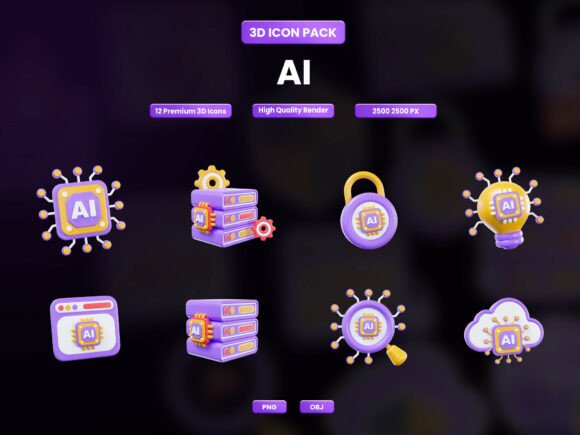
This specific style of iconography does more than just look good; it bridges the gap between cold, hard data and human-centric user experiences. Whether you are building a startup landing page or creating educational materials for a workshop, these assets provide a ready-made solution that saves time while elevating quality. The collection focuses on essential elements of the AI ecosystem—neural networks, AI chips, robots, machine learning models, automation gears, data processing streams, and sleek digital interfaces—all rendered in a high-resolution, transparent format that integrates seamlessly into any project.
Transforming Tech Presentations and Corporate Storytelling
One of the most immediate applications for this pack is in the realm of business presentations. We have all sat through slides filled with bullet points and generic stock photos that fail to capture attention. When discussing abstract concepts like machine learning algorithms or neural network architectures, visuals are not just helpful; they are necessary for comprehension.
Using Artificial Intelligence 3D Icon Design allows presenters to visualize these invisible processes. Imagine explaining how an AI chip processes data. Instead of describing it verbally, you can display a cute, chubby 3D render of a processor with glowing data lines flowing into it. The friendly aesthetic reduces the intimidation factor often associated with advanced technology, making your pitch more accessible to investors, stakeholders, or clients who may not have a technical background. The high resolution of 2500x2500 pixels ensures that these icons remain crisp even when projected on large screens, maintaining a professional polish throughout your delivery.
Enhancing UI/UX for Apps and Websites
User interface and user experience design have shifted significantly toward depth and tactility. Flat design had its moment, but modern users respond well to elements that feel tangible and interactive. For app developers and web designers, incorporating 3D icons can guide user behavior and improve navigation intuitiveness.
Consider a fintech app introducing new AI-driven budgeting tools. Using a soft, rounded 3D icon of a robot assistant or a holographic data chart creates a sense of trust and approachability. These icons work exceptionally well in hero sections of websites, where they serve as the focal point above the fold. They draw the eye immediately and set the tone for the brand—modern, innovative, yet friendly. Because the files come with transparent backgrounds, integrating them into various color schemes and layout structures is effortless. You can place a VR headset icon next to a "Explore Metaverse" button or use a crypto coin render to highlight blockchain features, ensuring consistency across your digital product.
Engaging Audiences in Education and Content Creation
Educators and content creators face the constant challenge of keeping their audience engaged while simplifying complex topics. In workshops, online courses, or explainer videos, visual aids are paramount. The "chubby" style of these 3D icons is particularly effective here because it feels playful and non-threatening. It lowers the cognitive load for learners, allowing them to focus on the concept rather than struggling with dense text.
For example, an instructor teaching about automation could use a series of icons showing a robot arm interacting with digital gears. In an explainer video animation, these static PNGs can be easily animated using simple keyframe movements, bringing the characters to life without the need for expensive 3D modeling software. This makes high-quality visual storytelling accessible to solo creators and small educational teams. The inclusion of metaverse-related objects like avatars and portals also makes this pack relevant for forward-thinking curriculum designers who are preparing students for future digital landscapes.
Strategic Branding for Startups and Marketing Campaigns
Startups in the AI and tech sectors often struggle to differentiate themselves visually. Many fall into the trap of using similar blue-and-white color palettes and abstract geometric shapes. Adopting a distinct 3D icon style can become a core part of your brand identity. The smooth, colorful nature of these assets suggests innovation tempered with usability—a powerful message for new businesses trying to gain traction.
In marketing campaigns, these icons can be used across social media graphics, email newsletters, and blog headers. They create a cohesive visual thread that ties different pieces of content together. For instance, a series of LinkedIn posts discussing the benefits of data processing could each feature a unique 3D icon from the pack, creating a recognizable series that followers begin to associate with your brand’s voice. The versatility of the pack means you can maintain this consistency whether you are promoting a serious B2B service or a consumer-facing AI tool.
Practical Considerations for Implementation
While the benefits of using pre-made Artificial Intelligence 3D Icon Design assets are clear, there are practical considerations to keep in mind to ensure they serve your project effectively. First, consider color harmony. Although these icons are colorful and vibrant, they should complement your existing brand palette. Since they are high-resolution PNGs, you can adjust their brightness, contrast, or saturation in image editing software to better match your specific design system if needed.
Secondly, think about scale and placement. These icons are detailed. While they look stunning as large hero images, using them too small in a dense footer menu might cause them to lose their impact. They are best utilized as focal points or primary navigation elements where their 3D depth can be appreciated. Additionally, while the transparent background is a huge advantage, always check how the icon edges interact with your background color. On very dark or very light backgrounds, the soft shadows inherent in 3D renders usually blend well, but testing is essential to ensure no awkward halos appear.
It is also worth noting the limitations of static 3D renders compared to real-time 3D models. While these PNGs are perfect for most web and print uses, they do not offer interactivity like rotation or zooming within a browser environment. However, for the vast majority of use cases—from slide decks to static web pages—the trade-off in file size simplicity and ease of use is overwhelmingly positive. You get the visual appeal of 3D without the technical overhead of WebGL or heavy loading times.
Ultimately, this collection of 12 essential AI-themed icons offers a shortcut to professional-grade visuals. By leveraging these assets, you can communicate complex ideas with clarity and charm, ensuring your message resonates with your audience. Whether you are designing the next big app interface, crafting an engaging educational module, or pitching a revolutionary tech startup, these smooth, chubby 3D icons provide the visual leverage you need to succeed in a digital-first world.