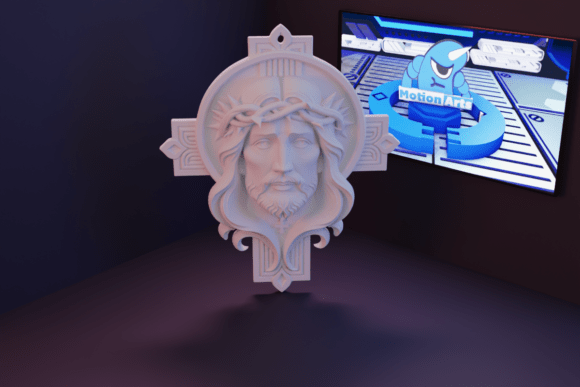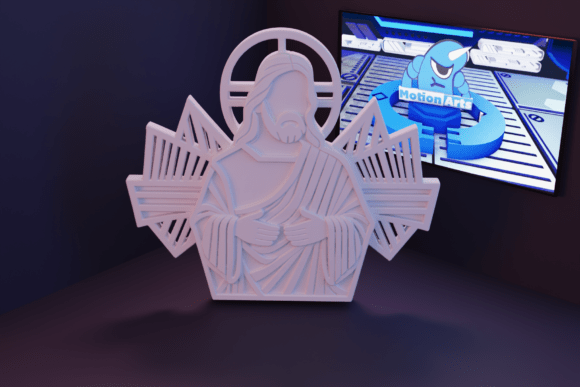
Jesus – Arte 2D: Bridging Digital Design and Tangible Faith
In an era where digital creativity intersects with traditional craftsmanship, Jesus – Arte 2D emerges as a unique medium for expressing devotion. This isn't just a static image file; it is a versatile digital asset designed to bridge the gap between screen-based art and physical objects. Whether you are a hobbyist 3D printer enthusiast, a professional interior designer, or someone looking to create a meaningful spiritual gift, this 2D art in STL format offers a flexible foundation for bringing serenity and inspiration into your space.
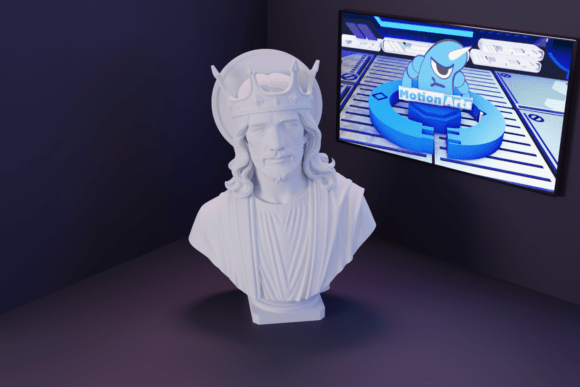
The concept is straightforward yet powerful. You receive a high-quality, AI-generated 3D model optimized for relief printing or digital manipulation. Unlike complex, multi-part figurines that require assembly and extensive post-processing, this 2D relief design focuses on depth, texture, and stylized detail. It captures the essence of Jesus in a way that conveys peace, making it ideal for those who appreciate modern aesthetics blended with religious tradition.
Transforming Home Decor with Personalized Spirituality
One of the most compelling uses for Jesus – 2D Art in STL Digital Format is in home decoration. Mass-produced religious decor often lacks personal touch or specific stylistic alignment with modern interiors. By utilizing this digital model, you gain complete control over the final appearance.
Imagine creating a custom wall hanging for your living room or entryway. Instead of buying a generic print, you can 3D print the relief in white PLA for a minimalist, sculptural look, or use wood-infused filament to mimic carved timber. The result is a piece that feels bespoke and intentional. For those who prefer traditional methods, the STL file can serve as a reference for CNC routing or laser cutting, allowing you to create intricate wooden panels that serve as focal points in a prayer corner or meditation space.
The versatility extends to color and finish. Because the model is optimized for painting, artists can apply acrylics, oils, or even gold leaf to highlight the contours of the face and robes. This makes it an excellent project for families looking to engage in creative activities together, turning the act of creation into a form of worship and reflection.
Ideal for Religious Institutions and Community Gifts
Beyond individual homes, Jesus – Arte 2D holds significant value for churches, Sunday schools, and community groups. Religious institutions often seek affordable yet dignified ways to produce materials for events, retreats, or fundraising.
Consider a church youth group looking for a meaningful craft activity. Printing these reliefs allows participants to engage with technology while creating something sacred. Once printed, the pieces can be painted and framed as gifts for elderly members of the congregation, fostering intergenerational connection. The low cost of filament compared to purchasing pre-made religious statues makes this a budget-friendly option for large-scale projects.
Furthermore, clergy and ministry leaders can use these designs to create unique keepsakes for baptisms, confirmations, or weddings. A small, framed relief of Jesus serves as a tangible reminder of faith during significant life milestones. The ability to customize the size and material means you can tailor the gift to the recipient’s taste, whether they prefer a rustic wood finish or a sleek, modern resin cast.
Creative Applications for Artists and Makers
For digital artists and makers, this STL file is more than just a religious icon; it is a design element. The stylized nature of the Jesus – 2D Art in STL Digital Format allows it to be integrated into larger artistic compositions. Jewelry designers might scale down the model to create pendants or charms using resin printers, which offer higher resolution for fine details. These small items can be sold at craft fairs or online marketplaces, appealing to customers seeking subtle expressions of faith.
Graphic designers can also benefit from this asset. While the primary format is STL for 3D printing, the underlying geometry can be rendered into 2D images for use in digital murals, greeting cards, or website backgrounds. The clean lines and serene expression provide a professional and respectful visual that avoids the clichés often found in stock photography.
Additionally, educators teaching digital fabrication or religious studies can use this model as a case study. It demonstrates how modern technology can preserve and propagate traditional symbols. Students can learn about slicer settings, support structures, and material properties while discussing the cultural and spiritual significance of the subject matter.
Practical Considerations for Best Results
While the potential applications are vast, achieving the best results requires attention to detail. Since this is an AI-generated 3D design, it is essential to understand its technical nuances. The model is optimized for relief printing, meaning it has a flat back and raised details. This orientation minimizes the need for complex support structures, but it does not eliminate them entirely.
Printer Settings and Orientation
- Orientation: Print the model flat on the build plate. This ensures the best surface quality for the front-facing details and reduces the risk of warping.
- Supports: Depending on the depth of the relief and your printer’s capabilities, you may need minimal supports for overhangs in the hair or robe folds. Always check the slicer preview before starting the print.
- Layer Height: For a smooth finish that captures the stylized details, use a layer height of 0.1mm to 0.2mm. Finer layers will reduce visible striations, making painting easier later.
Material Selection
The choice of material dramatically affects the final aesthetic. PLA is excellent for beginners due to its ease of use and wide color range. For a more premium look, consider PETG for durability or resin for high-detail miniatures. If you plan to paint the model, white or gray filaments provide a neutral base that allows colors to pop. Wood-filled filaments can be sanded and stained to achieve a realistic carved-wood appearance, adding warmth and tradition to the piece.
Post-Processing
After printing, light sanding can remove any minor imperfections or support marks. Priming the surface before painting ensures better adhesion and a uniform finish. For those using the model for digital purposes, rendering software can be used to adjust lighting and textures, creating photorealistic images for virtual galleries or online publications.
Navigating Limitations and Expectations
It is important to approach this digital product with realistic expectations. As an AI-generated design, the model may have occasional artifacts or irregularities that differ from hand-sculpted models. These quirks can often be smoothed out during post-processing or embraced as part of the unique character of the piece. However, users should inspect the mesh in their slicer software to identify any non-manifold edges or errors that could affect printability.
Additionally, the "2D" nature of the art means it lacks the full three-dimensional complexity of a statue. It is designed for relief applications, so it will not stand freely on a shelf without a frame or backing. This limitation is also its strength, as it encourages creative mounting solutions and integration into walls, frames, and other surfaces.
Ultimately, Jesus – Arte 2D offers a modern pathway to engaging with faith through creativity. It empowers individuals to move beyond passive consumption of religious imagery, inviting them to participate in the creation of meaningful, personalized artifacts. Whether used for quiet reflection, communal gifting, or artistic exploration, this digital model serves as a versatile tool for bringing spiritual inspiration into the physical world.